Our story
From the Tuscan roots of Ponte a Egola to the legacy of Attilio Puccini
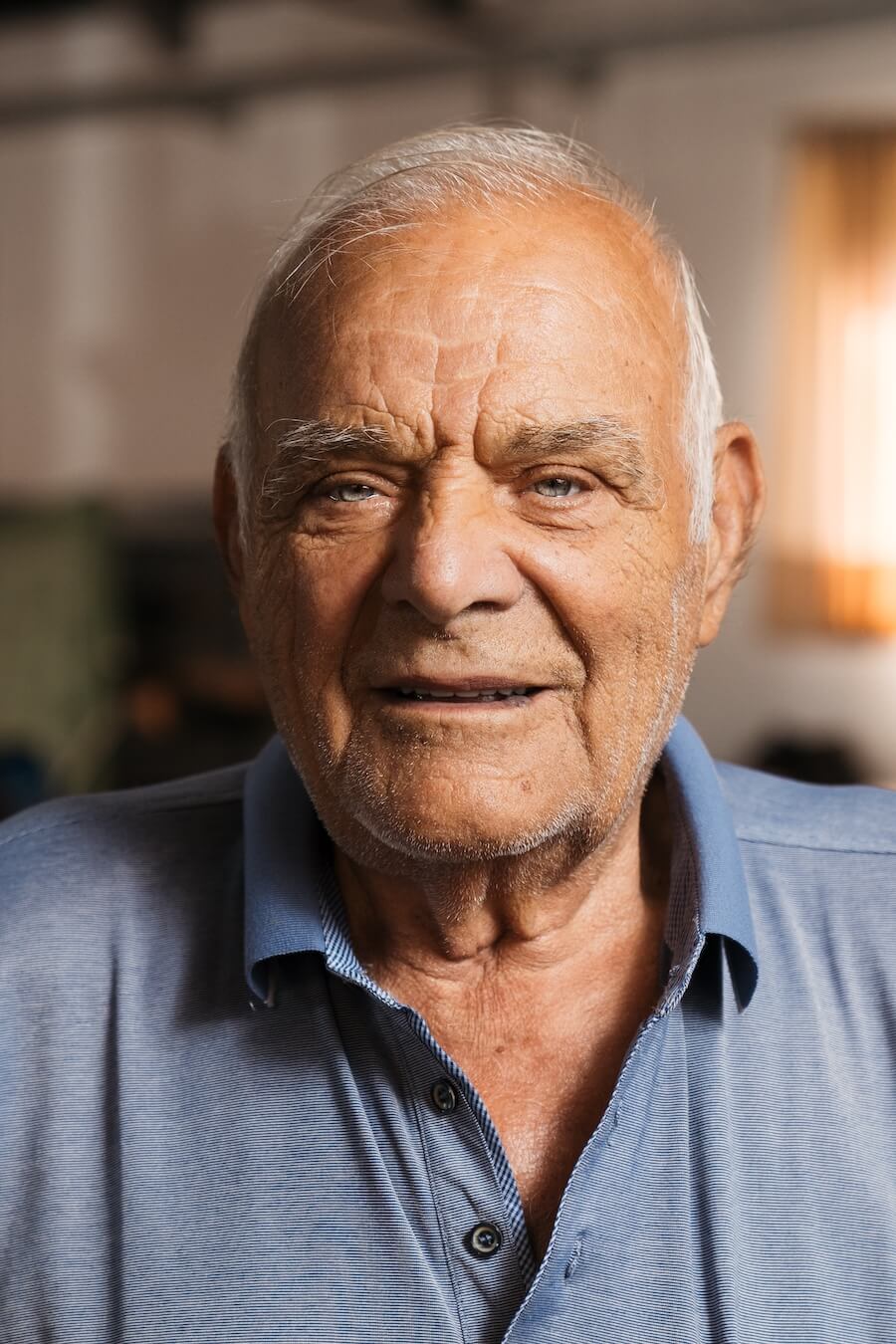
Our story begins in Ponte a Egola, a small Tuscan town where the art of vegetable tanning has thrived for centuries. It was here, decades ago, that Attilio Puccini founded the tannery with a clear vision: to believe in quality, respect the environment, preserve the artisan tradition, and pass these values on to his family.
The walls of the tannery still echo his passion today and safeguard a knowledge we consider a precious legacy.
We are not just an industry, but a family of artisans, Tuscan master tanners. Our identity lives in vegetable-tanned vacchetta: a natural, authentic leather that evolves and improves over time. Each process is a meeting point between craftsmanship and research, between respect for origins and the innovation that drives us toward the future.
Conceria Puccini is this: tradition, passion, and a future born leather after leather.

Our philosophy
From simple waste to timeless excellence
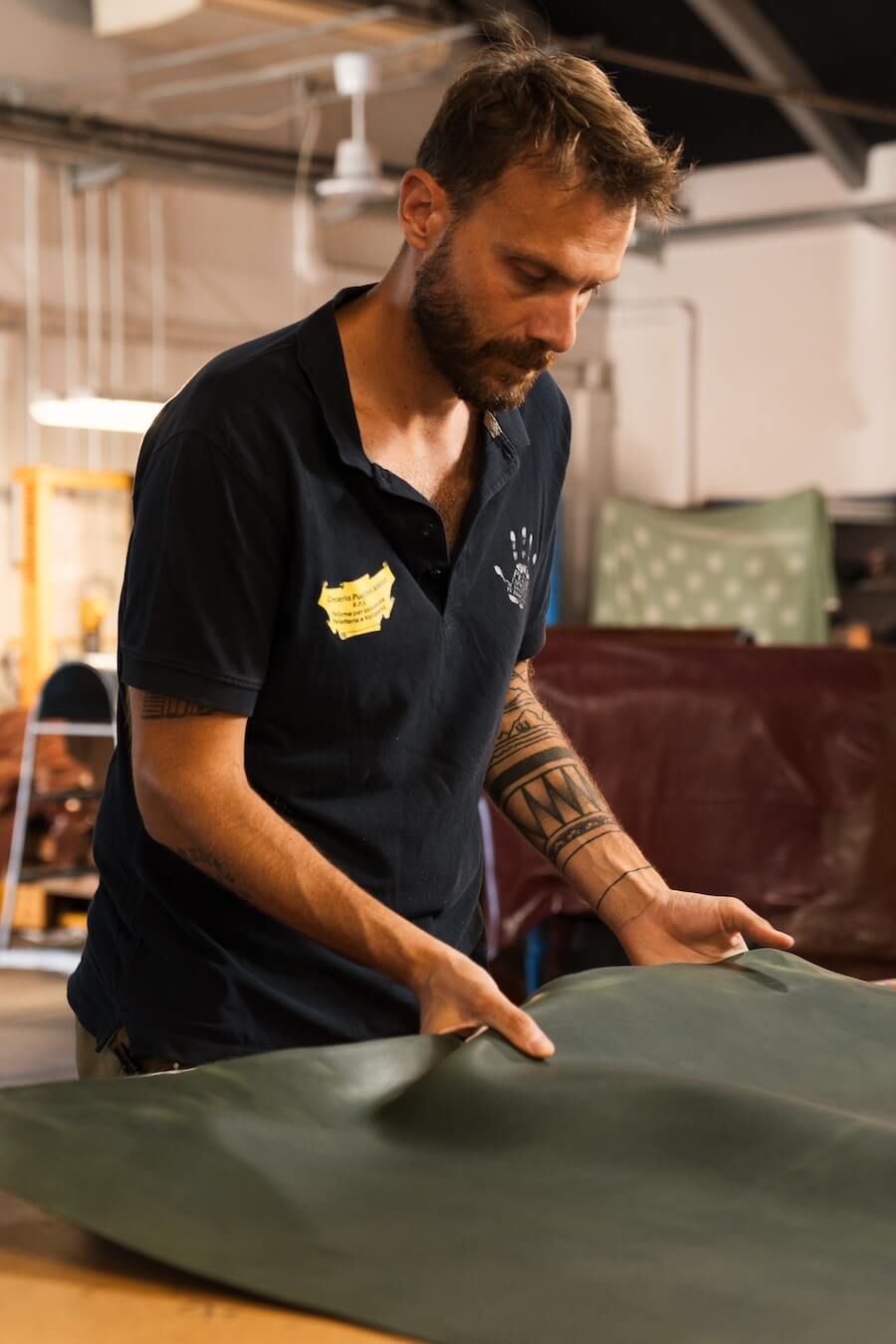
Every hide carries a story. A story made of time, of marks, of imperfections that make it unique. We embrace it as it is: with its traces, its veins, the memory of the animal’s life. We do not see it as waste, but as a living material, worthy of respect and ready to be reborn with the right care.
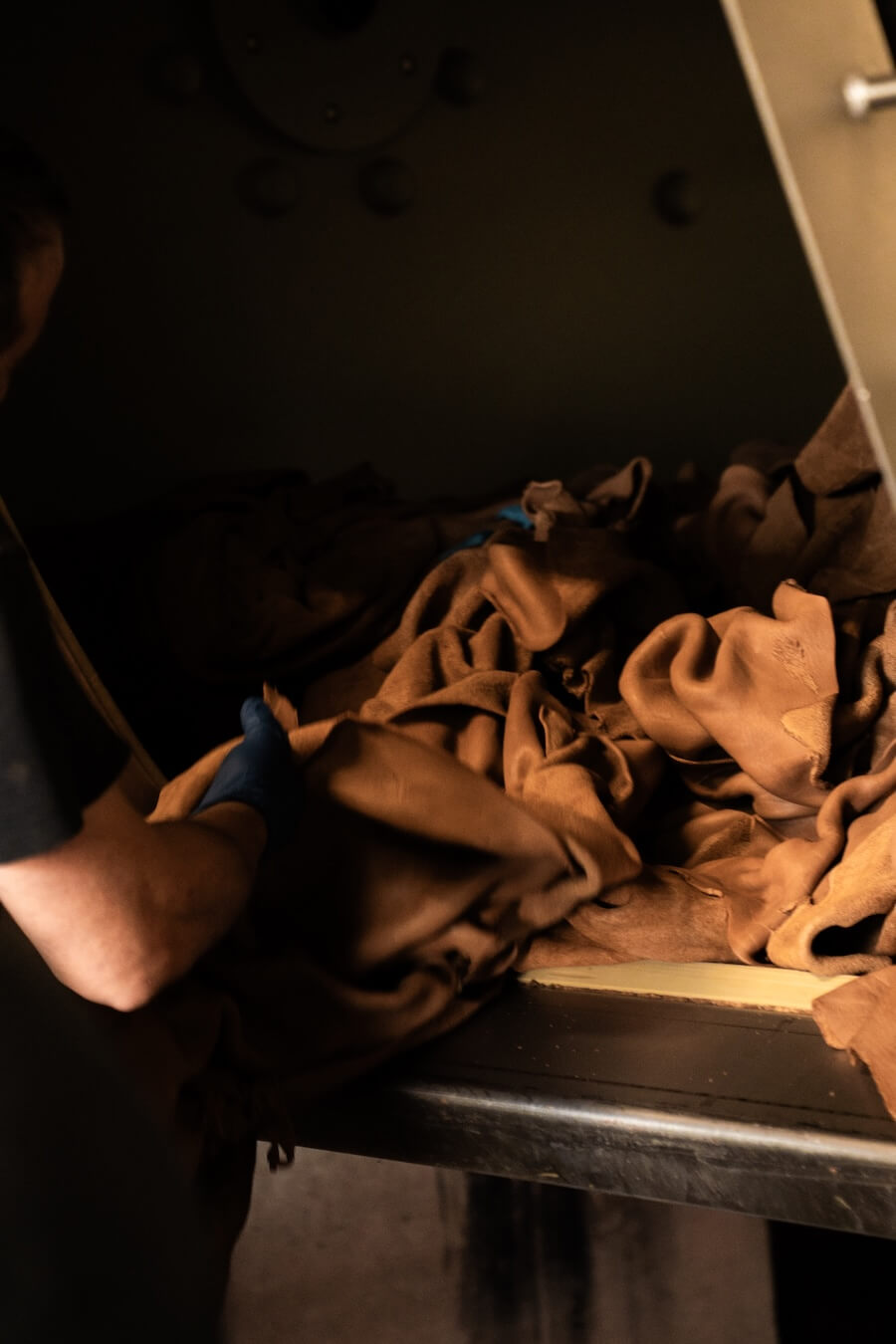
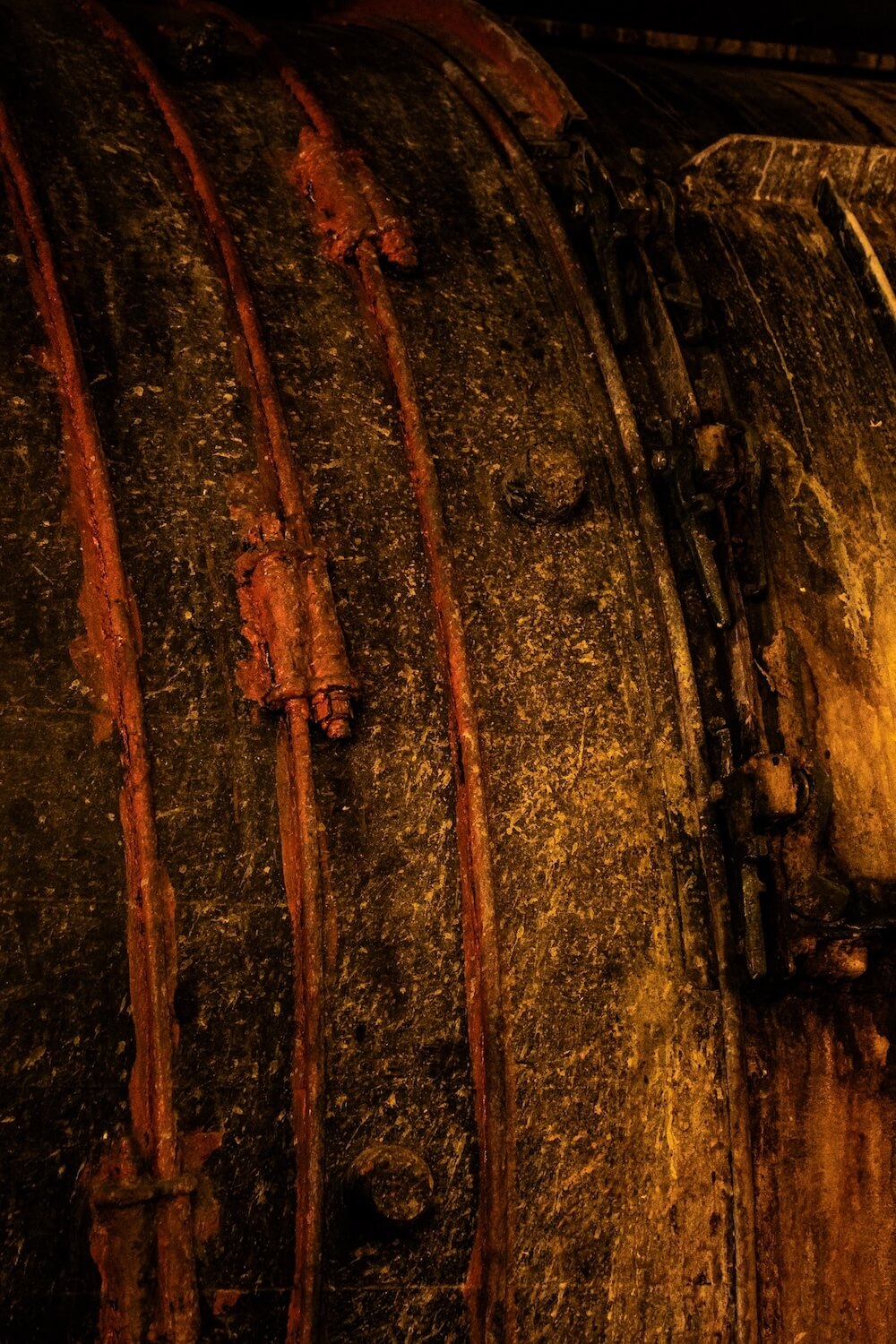
In our wooden drums, pure water and natural tannins from chestnut, mimosa, and quebracho begin the transformation. It is an ancient ritual which, without haste and without aggressive chemicals, restores strength, softness, and authenticity to the leather. A process that speaks of nature, of time, and of skilled hands capable of preserving its beauty.
Here, the knowledge handed down through generations comes into play: recipes for fatliquors and dyes that give elasticity and unique shades, able to evolve and improve with time. Slow drying, polishing with felt and amber stone, manual finishing—details that reveal the care and artisan soul behind the work.
In the end, our most precious tool remains: hands that do not treat leather as just another raw material, but as something to be cherished. This is how we transform what others consider waste into excellence: not just leather, but culture, identity, and living tradition.