
The sustainability of vegetable tanning
An ethical and environmental commitment
Vegetable tanning is not just a production process, but a philosophy of respect and sustainability. Being founding members of the Consorzio Vera Pelle Italiana Conciata al Vegetale means following strict regulations: using only natural tannins, ensuring full traceability, working entirely in Tuscany, avoiding heavy metals, and minimizing environmental impact.
No animal is ever slaughtered for its hide: our work gives value to what would otherwise be waste. Even processing residues are recovered and reintroduced into a circular economy cycle, transforming into new resources.
Our tanning process
The strength of tradition, the breath of nature
1.
From raw to prepared
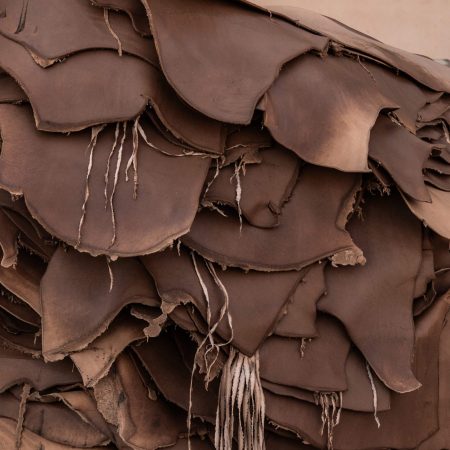
Everything begins with raw hides, sourced exclusively from European farms dedicated to food production. Once they arrive at the tannery, they are preserved in cool, dry environments to maintain their quality intact. Here, our cutters section them by hand, choosing the most suitable cut for the path each hide will follow.
The next step is regeneration. In large wooden drums, the hides are rehydrated, freed from salt and impurities, and prepared to receive the tanning. During the so-called liming process, residual hair is removed and, thanks to fleshing and splitting, excess meat and fat are eliminated. Finally, pickling makes the fibers ready to absorb the vegetable tannins that will forever define their destiny.
2.
The heart of tanning
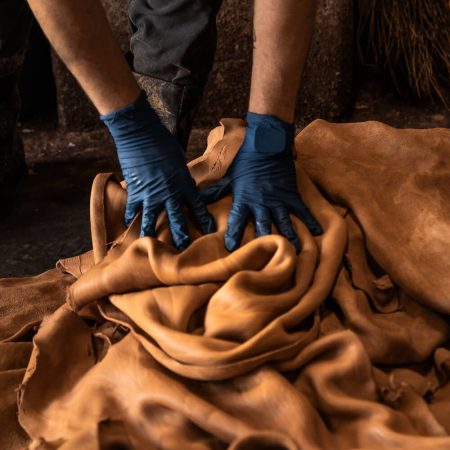
This is where the true magic of vegetable tanning takes place. The hides return to the drums, this time immersed in pure water and natural tannins extracted from chestnut, mimosa, and quebracho. These precious, renewable powders penetrate the fibers, making them resistant to decay, strong, and durable. It is a slow, natural process that respects the rhythm of the material and enhances its authenticity.
The result is not just any leather, but Tuscan vacchetta: warm, elastic, fragrant, able to age gracefully, changing and improving alongside those who choose it.
3.
Color and finishing
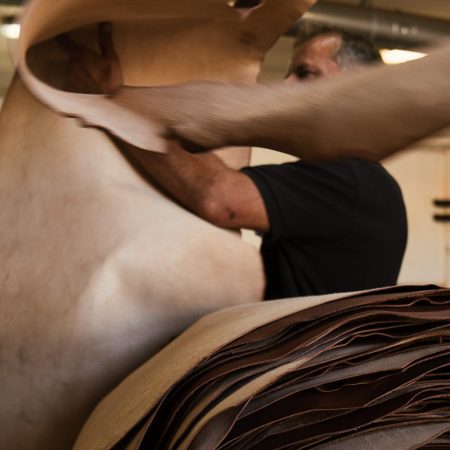
After tanning, the leather undergoes new processes that give it character and personality. Fatliquoring, prepared with ancient recipes based on animal, vegetable, and marine oils, imparts softness and elasticity. Dyes penetrate deeply, delivering vivid and never artificial tones, where every shade becomes a mark of uniqueness.
This is followed by slow, natural drying, which stabilizes the fibers. Then comes finishing, made up of age-old gestures: hand padding that adds transparency and warmth, light sprays that brighten the color, felt rollers and amber stone polishing that bring out a natural shine.
Each leather thus becomes unrepeatable, a unique piece born from the meeting of nature and craftsmanship.
